SEO reports can be full of numbers: rankings, traffic, impressions, domain scores and more. But which ones actually show whether your SEO investment is paying off? Focusing on the right metrics helps you make better decisions and have clearer conversations with your SEO team.
Think in layers
SEO success can be measured at several levels:
- Visibility: are you showing up in search?
- Traffic: are people clicking through?
- Engagement: do visitors find your content useful?
- Conversions: do visitors become leads or customers?
- Business impact: is SEO generating revenue and profit?
Early in an SEO campaign, visibility metrics move first. Over time, conversion and revenue metrics matter most.
Visibility metrics
Impressions
How often your pages appear in Google results, from Search Console. Growing impressions show Google is ranking you for more searches.
Keyword rankings
Positions for your important keywords. Track a focused list of commercially valuable terms rather than hundreds of random ones. Rankings fluctuate daily and vary by location and device, so look at trends over weeks and months.
Number of ranking keywords
How many keywords your site ranks for, especially on the first page. Growth here shows expanding visibility.
Local visibility
For local businesses, track Google Business Profile views, searches and map rankings in your key areas.
Traffic metrics
Organic clicks and sessions
Visits from organic search, measured in Search Console (clicks) and Google Analytics (sessions). Look at overall trends and specific pages.
Click-through rate (CTR)
The percentage of impressions that become clicks. Low CTR on high-impression pages suggests titles and descriptions could improve.
Traffic to key pages
Overall traffic can grow from blog posts that don't bring customers. Track organic traffic to service and landing pages specifically.
Engagement metrics
Engagement rate and time
In Google Analytics 4, engaged sessions show visitors who stayed, viewed several pages or converted. Low engagement on key pages may signal content or user experience problems.
Pages per session and navigation
Are visitors exploring further, such as moving from a blog post to a service page?
Engagement metrics are useful signals for improving pages, though they aren't direct ranking factors you should obsess over.
Conversion metrics
Organic leads
The most important SEO metric for most businesses. Track:
- Form submissions.
- Phone calls from organic visitors.
- WhatsApp clicks or chats.
- Bookings and purchases.
Make sure conversion tracking is set up properly in Google Analytics.
Conversion rate
The share of organic visitors who convert. Improving pages can increase leads without more traffic.
Google Business Profile actions
Calls, website clicks, direction requests and messages from your profile.
Business impact metrics
Revenue from organic search
Connect leads to sales through your CRM, so you can see how much revenue SEO generates.
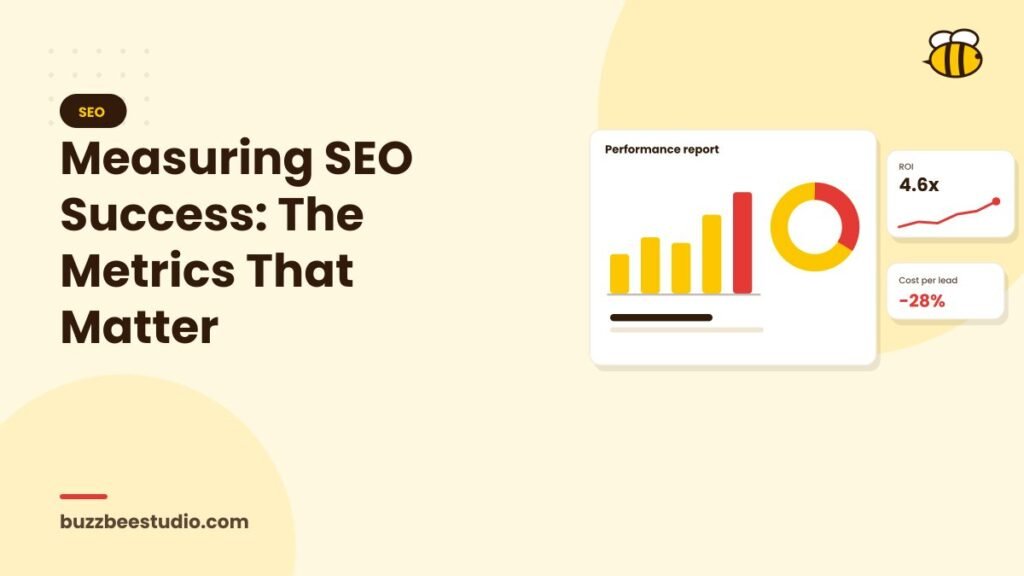
Cost per lead and return on investment
Compare SEO costs with the value of leads and sales it produces. Remember that SEO results often grow over time, so look at longer periods.
Customer lifetime value
Customers from organic search may have different value than those from other channels. Track this if possible.
Metrics to treat with caution
- Third-party authority scores: useful for comparison, but they're not Google metrics.
- Total backlinks: quality matters far more than quantity.
- Overall traffic alone: traffic without conversions may not help your business.
- Bounce rate in isolation: a visitor who finds your phone number and calls immediately may "bounce" but is a success.
Build a simple SEO dashboard
A monthly report might include:
- Organic clicks and impressions, compared with the previous month and year.
- Rankings for priority keywords.
- Organic traffic to key service pages.
- Organic leads by type: forms, calls and WhatsApp.
- Google Business Profile actions.
- Revenue from organic leads, if available.
- Work completed and next steps.
Tools like Looker Studio can combine data from Search Console, Analytics and other sources.
Account for seasonality
Compare periods carefully. Year-on-year comparisons help account for seasonal patterns, such as summer slowdowns or Ramadan changes.
Agree targets upfront
Before starting SEO, agree which metrics matter most and what success looks like at three, six and twelve months. Share the dashboard with everyone involved, so sales, marketing and management see the same numbers.
Final thoughts
The best SEO metrics connect visibility to business results. Track impressions and rankings to see progress, monitor traffic and engagement to improve pages, and above all measure leads and revenue. That's how you know SEO is truly working.
Buzz Bee Studio provides SEO reports focused on leads and revenue, not vanity metrics. Get in touch for a clear picture of your SEO performance.